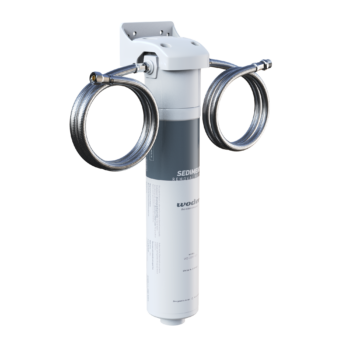
Your ice maker will tell on your water before anything else does. Cloudy cubes, slower fills, flat-tasting ice, and scale in the bin usually mean the line feeding the machine has more going on than plain water. In a lot of homes, that's the first clue that the water filter for ice maker setup is either missing, undersized, overdue, or matched to the wrong water.
I've seen plenty of machines blamed for bad ice when the actual issue was upstream. A clogged cartridge, hard water, or too much sediment can change how the ice forms long before the machine itself fails. If a leak or overflow has already caused damage around the kitchen, a practical water damage response guide is worth keeping close while you sort out the source.
The bigger point is this, an ice maker is less like a passive appliance and more like a little water-quality checkpoint. If the water is wrong, the ice shows it. If the filter is wrong, the machine shows that too. For broader context on what's often in household water in the first place, the Woder drinking water quality guide is a useful companion read.
Table of Contents
- Why Your Ice Tells You About Your Water
- What Makes Ice Makers Harder to Filter Than a Kitchen Tap
- Matching Filter Specs to Your Machine's Demand
- The Three Stages That Actually Matter
- Installing the Filter Without Calling a Plumber
- Replacement Timing Driven by Use, Not the Calendar
- When a Filter Is the Wrong Answer
Why Your Ice Tells You About Your Water
A homeowner usually notices the problem in the most ordinary way possible. The freezer is cold, the bin is working, but the cubes come out hazy, smell a little like chlorine, or take longer to build up than they used to. That's not just an ice issue. It's often the water line advertising what's in the supply.
Ice freezes in layers, so anything dissolved or suspended in the water gets reflected in the finished cube. Sediment can make ice look dull. Chlorine can leave an off-taste. Scale can start to show up as white crust around the machine or slow the fill path enough that output drops. In other words, the ice becomes a crude but honest snapshot of the water feeding it.
Practical rule: if the ice changed before anything else in the kitchen did, start with the filter and the water source before you start replacing parts.
That's why a water filter for ice maker isn't really about luxury. It's about keeping the line stable enough that the machine can do its job without fighting mineral buildup or taste problems. For a homeowner who wants the issue to stay small, that early clue matters more than waiting for the machine to fail outright.
There's also a useful parallel with how people think about water damage. The visible problem usually appears late, while the core issue has been building unseen in the background. That same pattern shows up here, where the ice is often the first visible sign that the supply line needs attention.
What Makes Ice Makers Harder to Filter Than a Kitchen Tap
They care about flow, not just cleanliness
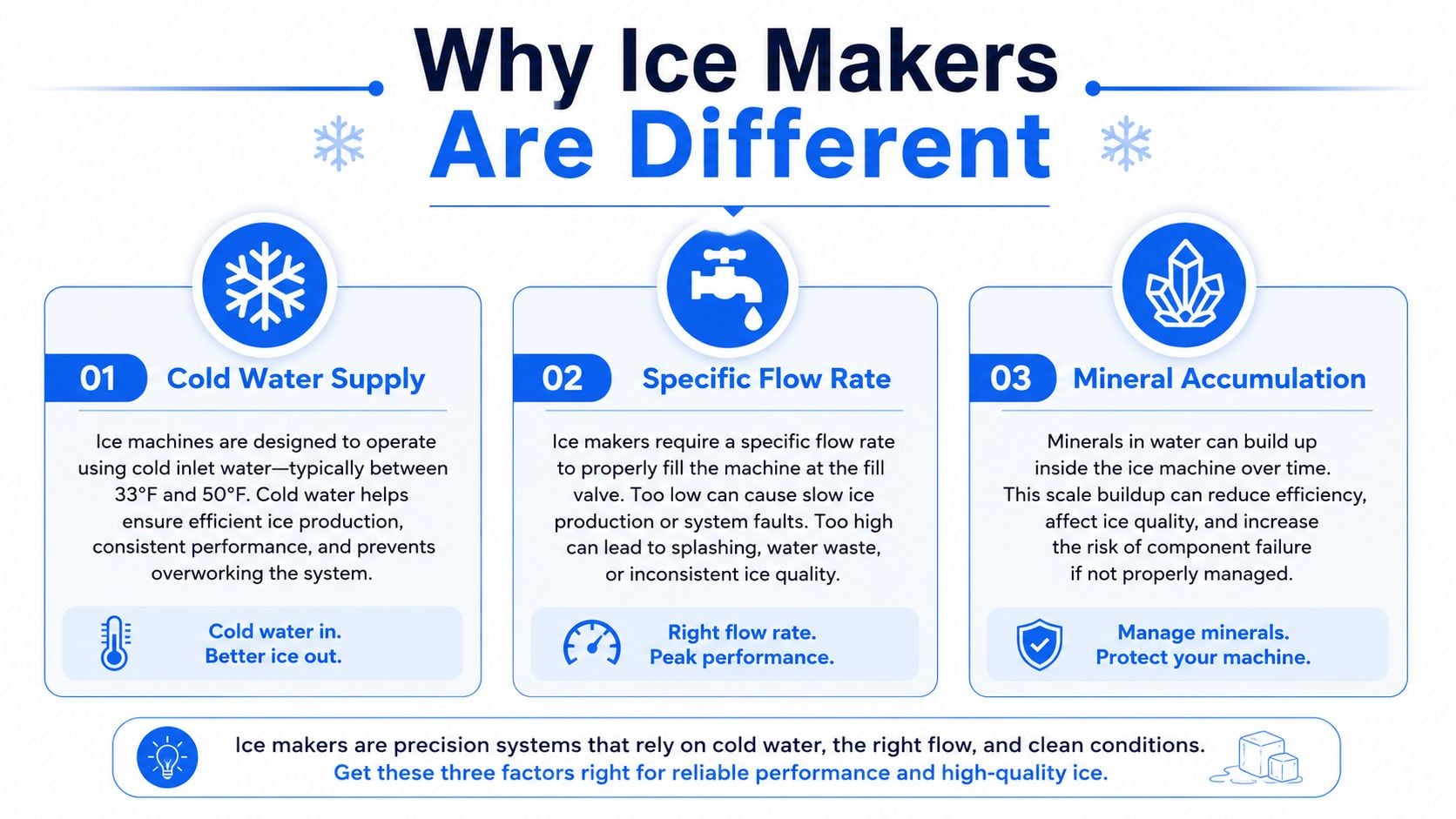
A kitchen tap can live with a little pressure variation. An ice maker usually cannot. It needs water delivered through a fill valve at the rate the machine expects, and the filter has to match that demand without choking the line. In the category, service flow rates commonly run from 0.5 to 4.2 gpm, and maximum inlet pressure is often capped at 125 psi. If the filter slows the fill too much, the machine makes less ice and the timing gets off.
That is why a generic filter that works fine on a drinking line can be a poor fit for an ice machine. A filter spec only makes sense when it matches the machine's fill demand, the micron target, and the pressure window together. If the filter is too restrictive, production drops. If it is too loose, sediment and taste problems can still reach the machine. A practical guide to inline refrigerator water filter models helps show why the cartridge choice has to follow the appliance, not just the label.
Cold water and mineral load change the outcome
Ice makers run on cold inlet water, and cold water behaves differently in the system than a room-temperature faucet supply. The colder the water path, the more any restriction or mineral loading tends to show up in real use. Add sediment, and the strain gets worse. Add hard-water minerals, and scale starts building where you do not want it.
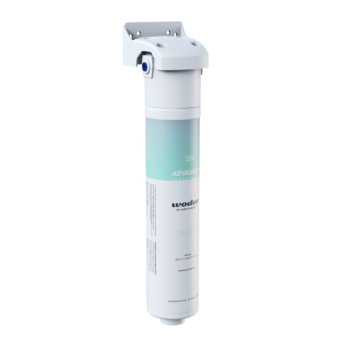
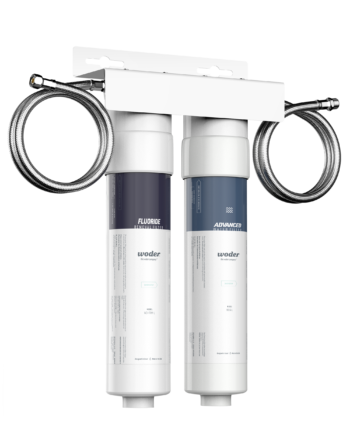
Manufacturers respond to that with 0.5-micron particulate control and, in some systems, staged protection for sediment and scale. One practical example in the market is the Woder WD-G4-210-JG Inline Water Filter w. JG (New WD-4K-ADV-JG), which is described as a U.S.-made inline filter for homes with whole-house sediment filtration or low sedimentation levels, with WQA certification to NSF/ANSI 42 for chlorine taste and odor and NSF/ANSI 372 for lead-free compliance.
The useful takeaway is simple. A water filter for ice maker has to match the machine's appetite, not just the water's taste problem. That is a different job than a faucet filter.
Matching Filter Specs to Your Machine's Demand
Start with the machine, not the cartridge aisle. The daily ice output tells you the rough load, the inlet flow tells you how much water the unit expects to receive, and the pressure range tells you how much restriction the system can tolerate before performance starts slipping. That's the sizing logic often overlooked.
A filter spec only makes sense when it fits three things at once, micron rating, service flow, and pressure window. If the filter flow rating sits below the machine's fill demand, you can throttle production. If the micron rating is too coarse, you may miss the sediment that causes trouble. If the pressure range is too tight, the system can be fussy in real-world conditions.
| Ice Maker Capacity Tiers and Filter Spec Targets | |||
|---|---|---|---|
| Daily Ice Output | Target Service Flow | Micron Rating | Filter Capacity Range |
| 0 to 600 lb/day | Match inlet demand with headroom | 0.5-micron target is common | Around 14,000 gallons |
| 601 to 1,000 lb/day | Higher-flow cartridge or housing | 0.5-micron target is common | Around 20,000 gallons |
| 1,000 to 2,500 lb/day | High-flow commercial-style setup | 0.5-micron target is common | Around 40,000 gallons |
The pattern behind those tiers is easy to miss if you only compare product labels. Smaller residential systems can get by with less capacity, while higher-output machines need larger cartridges or staged housings because the daily demand is higher. A filter that looks oversized on paper might still be the right choice if the machine runs a lot or the incoming water is dirty enough to load media quickly.
For homeowners comparing hardware in any category, the discipline is the same as choosing how to choose kitchen hardware. You match the part to the actual use, not the marketing label. The same logic applies here, just with water flow instead of drawer pulls.
If you're trying to keep replacement parts straight, the Woder cartridge replacement guide is a useful reference point for planning around maintenance instead of guessing.
The Three Stages That Actually Matter
One cartridge can be enough in the right conditions, but that isn't the same as saying every ice maker needs the same setup. In commercial work, the cleanest results usually come from a staged approach, sediment first, carbon second, and scale inhibition only when the water chemistry calls for it. That sequence protects the machine without overbuilding the system.
Sediment first, because grit causes the earliest problems
A sediment prefilter catches the larger particles before they load the carbon block. That matters because a clogged first stage can lower flow for everything downstream. In practice, it's the stage that prevents the rest of the filter train from getting buried too early.
Carbon for taste and chlorine control
Carbon does the work most homeowners notice first. It reduces chlorine taste and odor, which helps the ice taste cleaner. KitchenAid's performance data sheet reports a 96.9% average reduction in chlorine taste and odor, from an average influent of 1.987 mg/L to an average effluent of 0.086 mg/L under NSF test conditions KitchenAid performance data sheet.
Scale inhibition only when the water warrants it
Scale control is the extra stage that earns its place in hard-water areas. One commercial ice system in the market uses a 10-inch 20-micron sediment filter, two 20-inch 5-micron carbon block filters, and a polyphosphate scale inhibitor, while other commercial lines use particulate reduction at 1 micron and capacities of 14,000, 20,000, and 40,000 gallons Watts ice/refrigerator filtration systems.
Not every water source needs the same stack. Soft municipal water with low sediment often does fine with a simpler setup. Hard water or heavy particulate loading is where the extra stage starts paying for itself.
That's also where a selective-filtration approach makes sense. You want enough treatment to protect the ice maker, not a system that strips the water past the point of practicality.
Installing the Filter Without Calling a Plumber
The cleanest installs are usually the boring ones. Turn off the cold-water supply, leave yourself enough room to change the cartridge later, and cut into the feed line only after you've confirmed the line size and routing. Most setups land on 1/4-inch or 3/8-inch tubing, so the fittings matter as much as the filter body itself.
The first thing I look for is clearance. If you can't reach the cartridge comfortably, you'll delay replacement later, and that's how good systems turn into neglected ones. A tee fitting may be needed to branch off the supply cleanly, especially if you're feeding both a faucet and an ice maker.
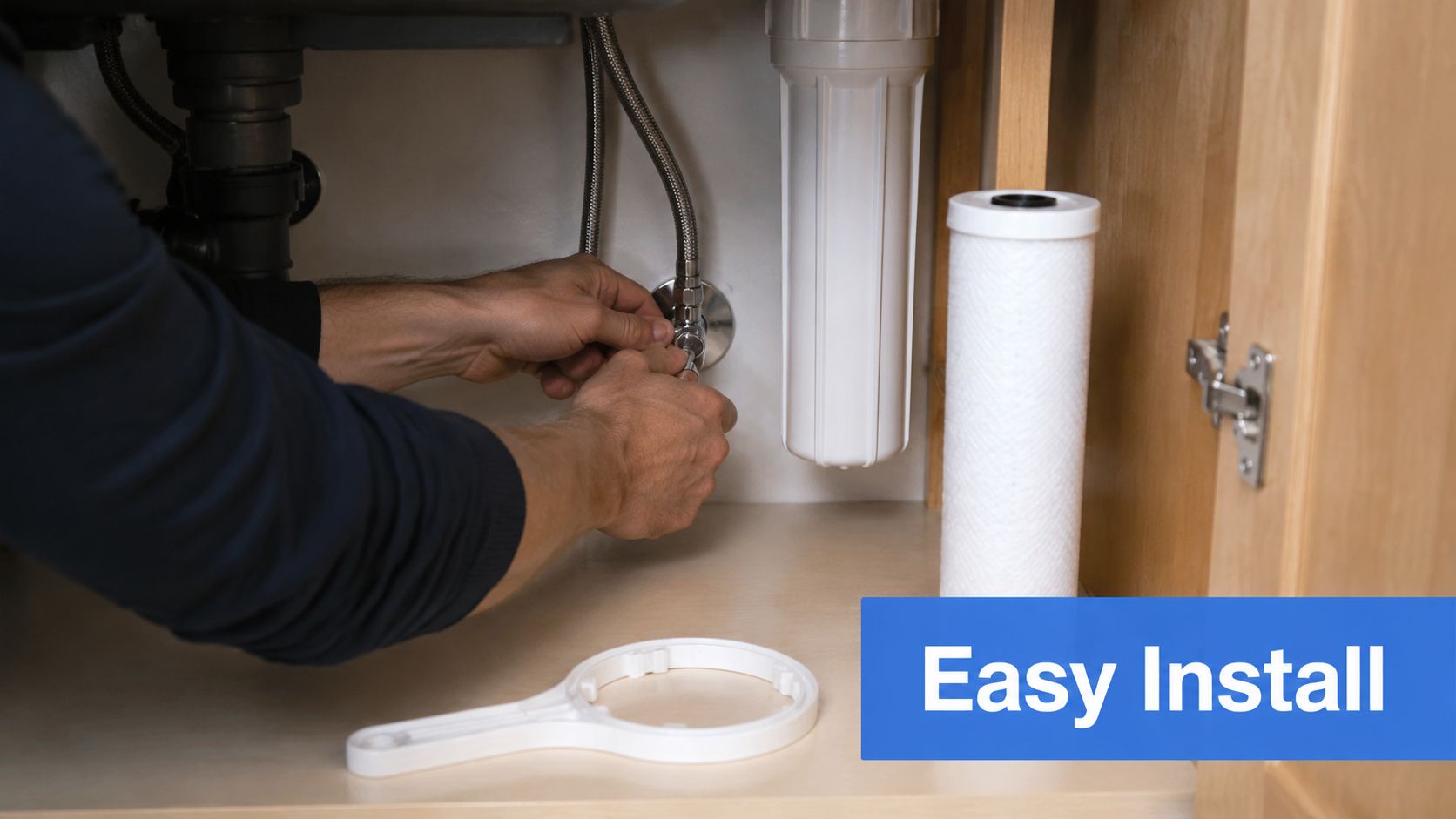
After the connections are tight, flush the line before you make ice. One ice-maker filter guide recommends running 3 to 5 gallons through the system to purge air and carbon residue before the first batch Best Ice Maker install guide. Skip that step and the first cubes often come out flat, dusty, or off-tasting.
A simple install checklist usually comes down to the basics:
- Shut off the supply: Don't start cutting until the line is dead.
- Confirm the tube size: A mismatched fitting causes more trouble than the filter itself.
- Mount for future access: The next cartridge change should be easy, not a contortion.
- Flush before use: That first rinse clears air and loose carbon.
- Reset the indicator if present: The reminder should reflect the new cartridge, not the old one.
If the tubing is tight, the access is awkward, or the appliance sits in a place you can't reach cleanly, it's reasonable to hand the job off. A good install is about preserving flow and serviceability, not just getting water through the box once.
Replacement Timing Driven by Use, Not the Calendar
The calendar gives you a starting point, not the full answer. Whirlpool says a freestanding ice maker's water filter should generally be changed every six months or after 2,000 gallons of use, and some retail inline systems are sold with a 6-month filter life Whirlpool guidance) Home Depot GE inline system.
That interval matters because filters aren't static. As sediment loads up and carbon media ages, flow drops and performance drifts. A house with heavier sediment or more frequent ice use will usually hit the limit sooner than a lightly used system on cleaner water.
The signs are usually practical before they're technical. Ice production slows. Cubes get smaller or hollow. Chlorine taste starts creeping back. Sediment shows up where it didn't before. Those are the moments when the cartridge is telling you it's out of breathing room.
For planning household maintenance, the same logic shows up in broader building water management, where routine replacement and inspection matter more than waiting for a visible failure. A practical building water guide is useful if you like managing systems on a schedule instead of reacting to messes.
When a Filter Is the Wrong Answer
A filter is not automatically the right move, and that's the part most ice maker guides don't say clearly enough. If the water is already low in hardness, low in sediment, and within the machine's expected range, adding more hardware may not buy you much. In some cases, it only adds pressure drop and another cartridge to maintain.
The opposite problem is over-filtration. Very pure water can cause trouble of its own in ice equipment, especially when the machine expects a minimum conductivity or a normal mineral background for sensor behavior. Independent discussion around ice-machine manuals notes that deionized water is not recommended and that extremely pure water may need blending or post-treatment because it can be too aggressive for the system. That's a reminder that “cleaner” isn't always “better” in mechanical terms.
Use water chemistry, not guesswork
Consumer guidance for ice maker water recommends keeping TDS around 70 to 200 ppm, hardness around 1 to 5 grains per gallon, which is about 17 to 85 ppm as CaCO3, free chlorine below 0.05 ppm, and pH near 6.8 to 7.4, with sediment plus carbon filtration as the standard everyday setup Euhomy guide. Those targets don't tell you everything, but they give you a practical frame for deciding whether you need more filtration, less filtration, or just a different cartridge.
A lot of homeowners never pull their water report, so they end up buying by fear or by habit. The better move is to check the local Consumer Confidence Report or order a basic lab test, then compare the results against the machine's flow and pressure needs. If the water is already within a reasonable range, a simpler system may be enough. If it isn't, the right staged filter can solve the problem without overshooting it.
The decision isn't filter or no filter. It's whether the filter matches your water, your ice maker, and the amount of ice you actually use.
That's where a single-cartridge selective filtration approach can make sense for readers who want to reduce common contaminants while keeping the water usable for the appliance. Woder's point-of-use filters are built around that idea, which is why the fit matters more than the label.
If your ice maker has been making cloudy cubes, slow fills, or flat-tasting ice, start with the water report, the machine's flow demand, and the cartridge spec before you replace parts at random. Woder Filters offers point-of-use filtration designed for American homes that want targeted contaminant reduction without stripping out essential minerals, and that same approach fits the reality of a well-matched water filter for ice maker setup. Visit Woder Filters to compare options, then choose the cartridge that fits your water instead of guessing.