Woder vs. Frizzlife
Which Under-Sink Water Filter Is Right for You?
Choosing between two under-sink filters sounds straightforward until you start looking at how they actually work. Both Woder and Frizzlife position themselves as smarter alternatives to bottled water, and both appeal to homeowners who want cleaner drinking water without calling a plumber. But the filtration approaches are genuinely different — and those differences have real implications depending on what you want from your water.
This comparison covers filtration technology, contaminant removal, installation, mineral retention, pricing, and what each brand’s approach means day to day.
At a Glance
| Feature | Woder | Frizzlife Non-RO | Frizzlife RO |
| Certification | WQA Gold Seal (NSF/ANSI 42 & 372) | NSF/ANSI 42 & 53 | NSF/ANSI various |
| Contaminant Scope | Broad — PFAS, VOCs, chromium 6, mercury, lead, chlorine | Chlorine & lead (certified) | Comprehensive (RO-level) |
| Mineral Retention | Yes — minerals never removed | Yes | No — stripped then re-added |
| Remineralization | Not needed | Not needed | Alkaline cartridge (standardized) |
| Drain Line Required | No | No | Yes |
| Storage Tank | No | No | Some models |
| DIY Install | Yes | Yes | More complex |
| Manufacturing | Mobile, Alabama, USA | Cixi City, Ningbo, China | Cixi City, Ningbo, China |
| Price Range | See woder.com | $60 – $130 | $200+ |
What Makes Woder Different
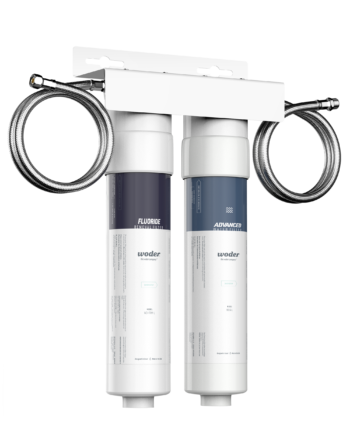
Woder is built around proprietary Advanced Selective Filtration technology. The system uses nanoparticles that attract and bind specific contaminants, pulling them out of your water while leaving beneficial minerals like calcium and magnesium completely untouched. Nothing is stripped and re-added. The minerals that were in your tap water stay in your filtered water.
Woder holds a WQA Gold Seal certification. The Gen4 WD-G4-REP cartridge — Woder’s most common advanced replacement filter — is independently certified by the Water Quality Association to:
- NSF/ANSI 42 — chlorine reduction, taste, and odor
- NSF/ANSI 372 — lead-free materials compliance
Both certifications are verified and substantiated by independent third-party test data. Beyond those certified claims, Woder also claims 99.9% removal of lead, chromium 6, mercury, PFAS, carcinogens, and volatile organic compounds (VOCs) based on their own testing of Advanced Selective Filtration technology.
Woder filters are manufactured and assembled in Mobile, Alabama, USA.
What Makes Frizzlife Different
Frizzlife operates across two distinct product categories that work very differently from each other.
Frizzlife Non-RO Filters
The MK99, SK99, and FK99 series use multi-stage carbon and composite filtration to reduce chlorine, taste, odor, and lead. These filters carry NSF/ANSI 42 and NSF/ANSI 53 certifications. NSF 42 covers aesthetic improvements like chlorine reduction, taste, and odor. NSF 53 covers health-related contaminants, primarily lead. Both certifications involve independent third-party verification.
The trade-off is scope. NSF 42 and 53 address a narrower set of contaminants. For households primarily concerned with chlorine taste and lead, Frizzlife’s certified non-RO filters handle those directly. For households worried about PFAS, chromium 6, mercury, or VOCs, Frizzlife’s non-RO line does not prominently certify against those contaminants.
Frizzlife RO Systems
The PD600-TAM3, PX500-A, and similar models use reverse osmosis, which removes nearly all dissolved solids. That makes contaminant removal very thorough — but it also strips out calcium, magnesium, and other minerals people generally want in their drinking water.
Frizzlife addresses this with an alkaline remineralization cartridge that adds minerals back after the RO membrane does its work. What gets added back is a standardized mineral blend — not the natural mineral profile of your original tap water.
Frizzlife filters are manufactured by Ningbo Eastpure Environmental Technology Co., Ltd., located on Xincheng Avenue, Cixi City, Ningbo, China.
Filtration Technology: A Side-by-Side Look
Contaminant Removal
Woder’s Advanced Selective Filtration targets contaminants selectively — removing lead, chlorine, chromium 6, mercury, PFAS, carcinogens, and VOCs without disrupting your water’s mineral content. The WQA Gold Seal certification independently verifies chlorine, taste, and odor reduction (NSF/ANSI 42) and lead-free materials compliance (NSF/ANSI 372).
Frizzlife’s non-RO filters carry NSF/ANSI 42 and 53 certification — solid third-party verification for chlorine and lead specifically. For households worried about PFAS, chromium 6, mercury, or VOCs, Frizzlife’s non-RO line does not prominently certify against those contaminants.
Frizzlife’s RO systems offer the most thorough removal of the three options — but at the cost of stripping minerals and requiring a remineralization stage.
Mineral Retention
This is where the two brands diverge most sharply.
Woder’s Advanced Selective Filtration is designed specifically to remove contaminants while leaving calcium and magnesium in the water. The minerals are never removed, so there is nothing to add back. This reflects a genuinely different filtration mechanism — not a marketing claim.
Frizzlife’s non-RO filters also retain minerals. Their RO systems, however, strip minerals out and then add a standardized mineral blend back through a remineralization cartridge. What gets added back is not the natural mineral profile of your original tap water.
| Why this matters If mineral-rich water is important to you, understand that Woder retains your tap water’s natural minerals from the start. Frizzlife’s RO line strips minerals and adds back a standardized blend afterward — a different outcome, even if both describe the result as “mineral water.” |
Installation: What Each System Requires
Woder
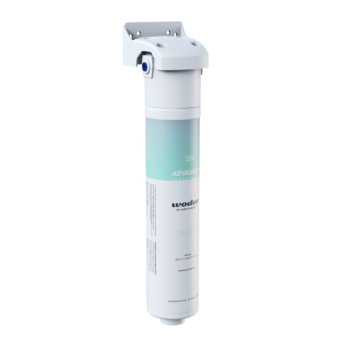
Woder filters are inline under-sink systems. Installation is DIY-friendly and does not require a drain line, a storage tank, or a dedicated faucet in most configurations. You connect the filter directly into your existing cold water supply line, there is no wastewater output, and most homeowners complete the installation without a plumber.
Frizzlife Non-RO Filters
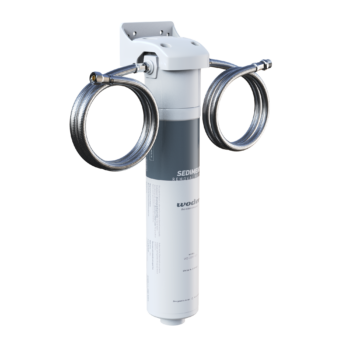
Frizzlife’s non-RO under-sink filters are also DIY-installable and drain-line-free. Installation complexity is similar to Woder’s. Both brands target the same type of homeowner — someone who wants cleaner water than a pitcher filter provides but does not want to deal with a full RO system.
Frizzlife RO Systems
Frizzlife’s RO models require considerably more. Reverse osmosis produces wastewater as a byproduct, so a drain line connection is required. Some models also need a storage tank under the sink. Even where Frizzlife markets their RO systems as tankless, you still need to account for the drain line and the additional cartridge stages.
If you rent, have limited under-sink space, or want the simplest possible setup, Woder and Frizzlife’s non-RO filters are in the same category. Frizzlife’s RO systems are a different commitment.
Manufacturing Origin
Woder filters are manufactured and assembled in Mobile, Alabama, USA.
Frizzlife filters are manufactured by Ningbo Eastpure Environmental Technology Co., Ltd., located on Xincheng Avenue, Cixi City, Ningbo, China.
If country of manufacture is an important factor in your decision, both brands are transparent about where their products are made — Woder in the USA, Frizzlife in China.
Pricing
Frizzlife’s non-RO under-sink filters are commonly priced in the $60 to $130 range. Their RO systems typically run higher, often $200 and above depending on the model and configuration.
For current Woder pricing, visit woder.com or use the filter finder to identify the right model for your household size and flow rate.
Who Each Filter Is Best For
Woder Makes Sense If You:
- Want broad contaminant removal — including PFAS, chromium 6, VOCs, mercury, and lead — in a single inline filter
- Want WQA Gold Seal certified performance for chlorine, taste, odor, and lead-free materials
- Want to keep your tap water’s natural mineral content without any remineralization stage
- Prefer a simple inline installation with no drain line and no storage tank
- Value US manufacturing
Frizzlife Non-RO Makes Sense If You:
- Want NSF/ANSI 42 and 53 certified filtration for chlorine and lead specifically
- Prefer third-party verified performance claims with a well-known certification body
- Are working with a tighter budget ($60–$130 range)
- Want a DIY install without a drain line
Frizzlife RO Makes Sense If You:
- Want the most thorough contaminant removal available and are comfortable with the RO trade-offs
- Are not concerned about losing natural minerals, since remineralization adds them back
- Have the under-sink space and are willing to run a drain line
- Are dealing with specific water quality issues that call for RO-level filtration
The Core Trade-Off
Frizzlife’s non-RO line offers NSF-certified filtration at an accessible price point, with a narrower contaminant removal scope. Their RO line offers more thorough removal but adds complexity, wastewater, and a bolt-on remineralization step — and is manufactured in China.
Woder filters selectively from the start — removing a broad range of contaminants without touching the minerals, backed by WQA Gold Seal certification and manufactured in the USA.
Neither is the objectively right answer for every household. The right choice comes down to what contaminants are actually in your water, how much weight you put on third-party certification, and how you feel about mineral retention.
Find the Right Woder Filter for Your Home
Woder’s lineup includes multiple models suited to different flow rates and household sizes. Use the filter finder at woder.com to find the right fit for your setup, or reach out to the team directly for personalized guidance.
Frequently Asked Questions
Does Woder have third-party certification?
Yes. Woder holds a WQA Gold Seal certification. The Gen4 WD-G4-REP cartridge is certified by the Water Quality Association to NSF/ANSI 42 (chlorine, taste, and odor reduction) and NSF/ANSI 372 (lead-free materials compliance), both verified by independent third-party test data.
Does Woder remove PFAS?
Woder claims 99.9% removal of PFAS along with lead, chlorine, chromium 6, mercury, carcinogens, and VOCs. These claims are based on Woder’s own testing of Advanced Selective Filtration technology, in addition to the independently certified claims above.
Is Frizzlife NSF certified?
Frizzlife’s non-RO under-sink filters carry NSF/ANSI 42 and NSF/ANSI 53 certifications, covering chlorine, taste and odor, and lead. NSF 42 and 53 do not cover PFAS or chromium 6.
Does Woder require a drain line?
No. Woder’s inline under-sink filters connect directly to your existing cold water supply line and produce no wastewater, so no drain line is needed.
Do Frizzlife RO systems waste water?
Yes. Reverse osmosis systems, including Frizzlife’s RO models, produce wastewater as part of the filtration process. This is a standard characteristic of RO technology.
Does Frizzlife’s remineralization cartridge replace natural minerals?
Not exactly. Frizzlife’s RO systems add minerals back after the RO membrane removes them. What gets added is a standardized mineral blend, not the natural mineral profile of your original tap water. Woder’s filters retain your tap water’s existing minerals without removing them in the first place.
Where are Woder and Frizzlife filters made?
Woder filters are manufactured and assembled in Mobile, Alabama, USA. Frizzlife filters are manufactured by Ningbo Eastpure Environmental Technology Co., Ltd. in Cixi City, Ningbo, China.
How do I find the right Woder model for my home?
Visit woder.com to explore model details, use the filter finder, or contact the team for personalized guidance.