A neighbor of mine got a letter from her water utility last spring. Buried in the fine print was a PFAS result she’d never heard of before, and she called me asking what it meant. That conversation is happening in a lot of households right now, usually starting the same way: someone reads the fine print about pfas chemicals in tap water and realizes they have no idea what it means. pfas in tap water isn’t some rare contamination event anymore. It shows up in cities, small towns, and plenty of private wells too, and most of the time you’d never know it just by looking at a glass of water. Below, we’ll cover where these chemicals come from, how to actually find out if they’re in your supply, and what to do once you know.
PFAS, in Plain Terms
PFAS is short for per- and polyfluoroalkyl substances. Manufacturers have used these chemicals since the 1940s, mostly for their ability to repel water, grease, and stains. That’s why they show up in nonstick pans, rain jackets, fast food wrappers, and firefighting foam. The chemistry that makes them so useful is also what makes them a problem: the carbon-fluorine bond holding these molecules together is one of the strongest in organic chemistry, and it just doesn’t break down easily. Scientists started calling them forever chemicals for a reason.
Once PFAS gets into soil or groundwater, it stays put for years, sometimes decades. Researchers have linked long-term exposure to thyroid issues, cholesterol changes, and effects on the immune system. The EPA tightened its limits on several PFAS compounds in drinking water recently, and a number of states went further with rules of their own. None of that means your water is automatically unsafe. It just means the question is worth asking rather than assuming.
Where PFAS Actually Comes From
There’s rarely one single explanation for PFAS contamination across an entire region. Usually it traces back to something specific nearby: a manufacturing plant, an airport or military base where firefighting foam was used during training, or an old landfill that took in PFAS-containing waste for years before anyone realized what that meant. From there, the chemicals migrate through soil and into groundwater, which is the same groundwater that feeds municipal treatment plants and the wells sitting in a lot of backyards.
That’s also why levels can swing wildly between two towns twenty miles apart, or even between two streets in the same neighborhood. A citywide water report might look perfectly fine on average while an older stretch of pipe near a former industrial site tells a different story. Well owners have it even harder here, since private wells don’t fall under the same testing rules that public utilities have to follow.
Actually Testing Your Water
Guessing gets you nowhere with PFAS. Testing does. There’s more than one way to go about it, and which one makes sense depends on how much detail you want and how fast you need an answer.
Your utility’s annual water quality report is the easiest starting point, and it costs nothing. As more testing requirements roll out, larger utilities have started publishing PFAS numbers alongside the usual chlorine and lead figures. Just keep in mind that this only tells you about the water leaving the treatment plant, not what’s happening by the time it reaches your faucet through decades-old pipes.
For something more precise, a pfas water test kit from an accredited lab is your best bet. You collect the sample yourself following the kit’s instructions, mail it off, and a lab that specializes in PFAS analysis runs the numbers. Anyone who has genuinely dug into how to test for pfas in water, or looked up how to test pfas in water step by step, usually lands here eventually. Certified lab testing can pick up specific compounds at concentrations most consumer-grade kits simply can’t detect.
Don’t overlook your state, either. Several state health departments and university programs offer free or discounted PFAS testing, especially in areas where contamination has already been documented. A quick search for your state plus PFAS testing might save you the cost of a private lab entirely.
On a well? The logic behind how to test water for pfas doesn’t really change, but the stakes go up a notch, since nobody else is checking your water for you. How to test for pfas in water at home on a private well usually means the same certified kits used for city water, often bundled with a wider panel that also flags bacteria and heavy metals while you’re at it.
Here’s something people miss: not every pfas water test on the shelf checks for the same compounds. Cheaper kits might only screen for a few of the more common PFAS chemicals, while a full lab panel can run dozens. Before you decide to pfas test water with a particular kit, or before you test my water for pfas through some random online seller, it pays to read exactly what’s included. A test that misses half the relevant compounds isn’t much of an answer.
Reverse Osmosis and PFAS: The Real Story
People ask this constantly once a test comes back positive, so let’s just answer it directly. Does reverse osmosis remove PFAS from water? Generally, yes. An RO membrane is fine enough to block most PFAS molecules along with a long list of other contaminants. But nothing’s free. RO systems also strip out calcium, magnesium, and other minerals your body actually wants, and they waste a fair amount of water in the process, often several gallons for every gallon that comes out filtered.
That tradeoff is why more homeowners look past RO toward filtration built to target PFAS specifically, without hauling the minerals and water waste along for the ride.
Beyond RO: Other Ways to Deal with PFAS
RO isn’t the only path if you’re figuring out how to remove pfas from water, and for a lot of households, it isn’t even the most practical one. A few other routes worth knowing:
Activated carbon. This is probably the most common method used to remove pfas from water outside of RO. Water passes through a bed of carbon media that adsorbs PFAS molecules along the way. Not all carbon filters are created equal here, so check whether a product has actually been tested against PFAS specifically before assuming it’ll do the job.
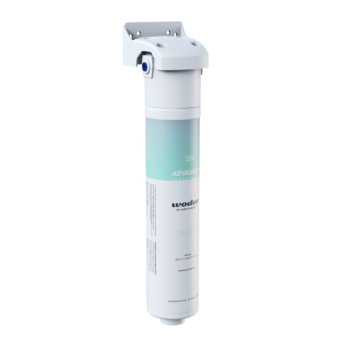
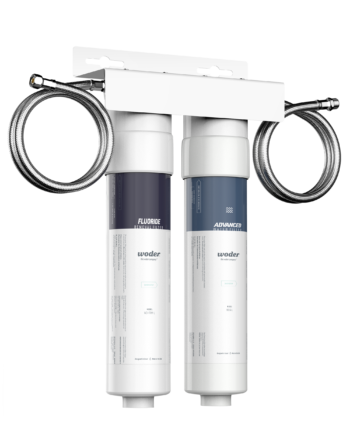
Selective filtration media. Instead of blocking nearly everything the way an RO membrane does, this newer approach uses media engineered to target specific contaminants like PFAS, lead, and chlorine, while letting the good minerals pass right through untouched. Woder’s Gen4 Advanced filters are built on exactly this idea, cutting PFAS without the wasted water or stripped minerals that come standard with reverse osmosis.
These systems swap PFAS ions for harmless ones as water passes through a bed of resin. It can work well for certain PFAS compounds, though the resin eventually needs replacing or regenerating to keep doing its job.
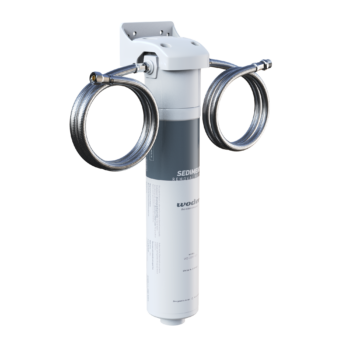
For most people, an inline or under-sink filter running selective or activated carbon media is the simplest answer to how to remove pfas from water at home, no major plumbing overhaul required. Whole-home systems exist for bigger problems, but they cost a lot more, and they’re usually only worth it once testing confirms contamination at the source rather than just at one tap. If your water also carries visible sediment, pairing PFAS filtration with a dedicated sediment pre-filter is worth considering too, since sediment can wear down other filter media faster than it should.
A couple of things worth knowing don’t work: boiling water does nothing for PFAS (it can actually concentrate it slightly as water evaporates), and a basic pitcher filter without PFAS-rated media might improve taste without touching the actual chemicals. So when you’re comparing filters that remove pfas from water, look past the marketing and check for real PFAS-specific test data, not just claims about chlorine or sediment.
Got a Positive Result? Here’s What to Do
First, don’t panic. Do take it seriously, though. Look closely at which compounds showed up and at what levels. Not every PFAS chemical carries the same risk, and current EPA guidance focuses mainly on PFOA and PFOS. From there, match your filtration to your actual exposure. If drinking and cooking water is the main concern, a single tap filter often covers it. If contamination runs through your whole plumbing, point-of-entry treatment makes more sense.
Want to remove pfas from drinking water without redoing your whole kitchen setup? A certified inline or under-sink filter is usually the quickest, cheapest place to start. And once you understand how to remove pfas from drinking water the right way, don’t skip the retest afterward. It’s the only way to confirm your filter is actually doing what it claims, since real-world performance doesn’t always match the lab numbers on the box.
The Bottom Line
You can’t see PFAS, you can’t taste it, and you definitely can’t guess your way to an answer. Testing is the only way to know what you’re actually dealing with. Once you have that number in hand, picking the right filter gets a lot simpler. Woder builds its Gen4 Advanced filters specifically to cut PFAS, lead, and chlorine while keeping the minerals your water is supposed to have. If your test already came back and you’d rather skip the wasted water and mineral loss that come with reverse osmosis, take a look at our full lineup of water filters to find the right fit for your home.
Frequently Asked Questions
How do I know if there’s PFAS in my tap water?
The only reliable way is testing. Start with your utility’s annual water quality report for a general picture, then follow up with a certified lab test if you want an answer specific to the water coming out of your own tap, especially if you’re on a private well.
Can I test my own water for PFAS at home?
Yes. Most certified test kits let you collect a sample at home and mail it to an accredited lab for analysis. Just check what compounds a specific kit actually screens for before you buy, since coverage varies a lot between products.
Does boiling water remove PFAS?
No. Boiling doesn’t break down PFAS, and it can even concentrate the chemicals slightly as water evaporates. Filtration, not heat, is what actually reduces PFAS levels in drinking water.
Is reverse osmosis the best way to remove PFAS from water?
RO does remove most PFAS effectively, but it also strips out beneficial minerals and wastes several gallons of water for every gallon filtered. Selective filtration media, like the technology behind Woder’s Gen4 Advanced filters, targets PFAS and other contaminants without those tradeoffs.
How soon should I retest my water after installing a filter?
It’s worth retesting shortly after installation to confirm the filter is performing as expected, since real-world results can differ from lab claims. After that, an annual retest is a reasonable habit, especially if you’re on a private well.